The Problem
Small home service businesses depend heavily on online reviews, but many owners do not have the time to consistently monitor and respond to them. Positive reviews often go unanswered, while negative reviews can sit too long without a thoughtful response, hurting trust with future customers. I wanted to build a tool that reduces that friction by helping businesses stay on top of customer feedback and respond quickly with professional, context-aware drafts.
Instead of forcing owners to manually read every review and come up with a reply from scratch, Chirp classifies incoming reviews by sentiment, urgency, and tags, then generates AI-assisted responses that owners can approve, edit, or reject before posting.
Key Features
- •Fetches Google Business Profile reviews into a unified dashboard
- •Classifies reviews by sentiment, urgency, and business relevant tags
- •Highlights negative or urgent reviews that need fast attention
- •Generates AI-powered draft replies tailored to each review
- •Lets owners approve, edit, reject, or post responses
- •Helps businesses maintain a faster and more consistent review workflow
- •Centralized dashboard for monitoring customer feedback
- •Structured review metadata to make trends easier to spot over time
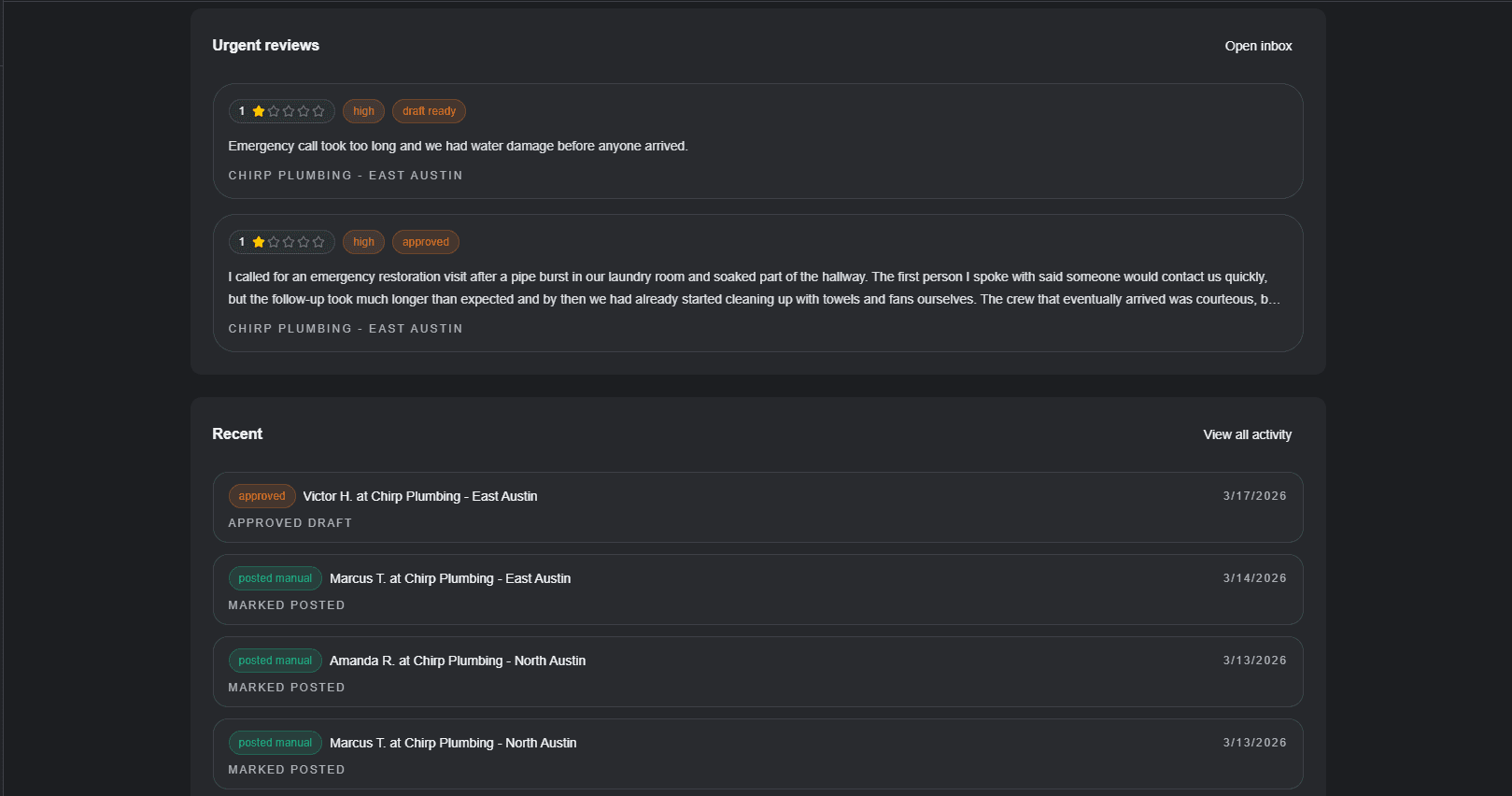
Overview showing urgent reviews, recent activities, and analytics.
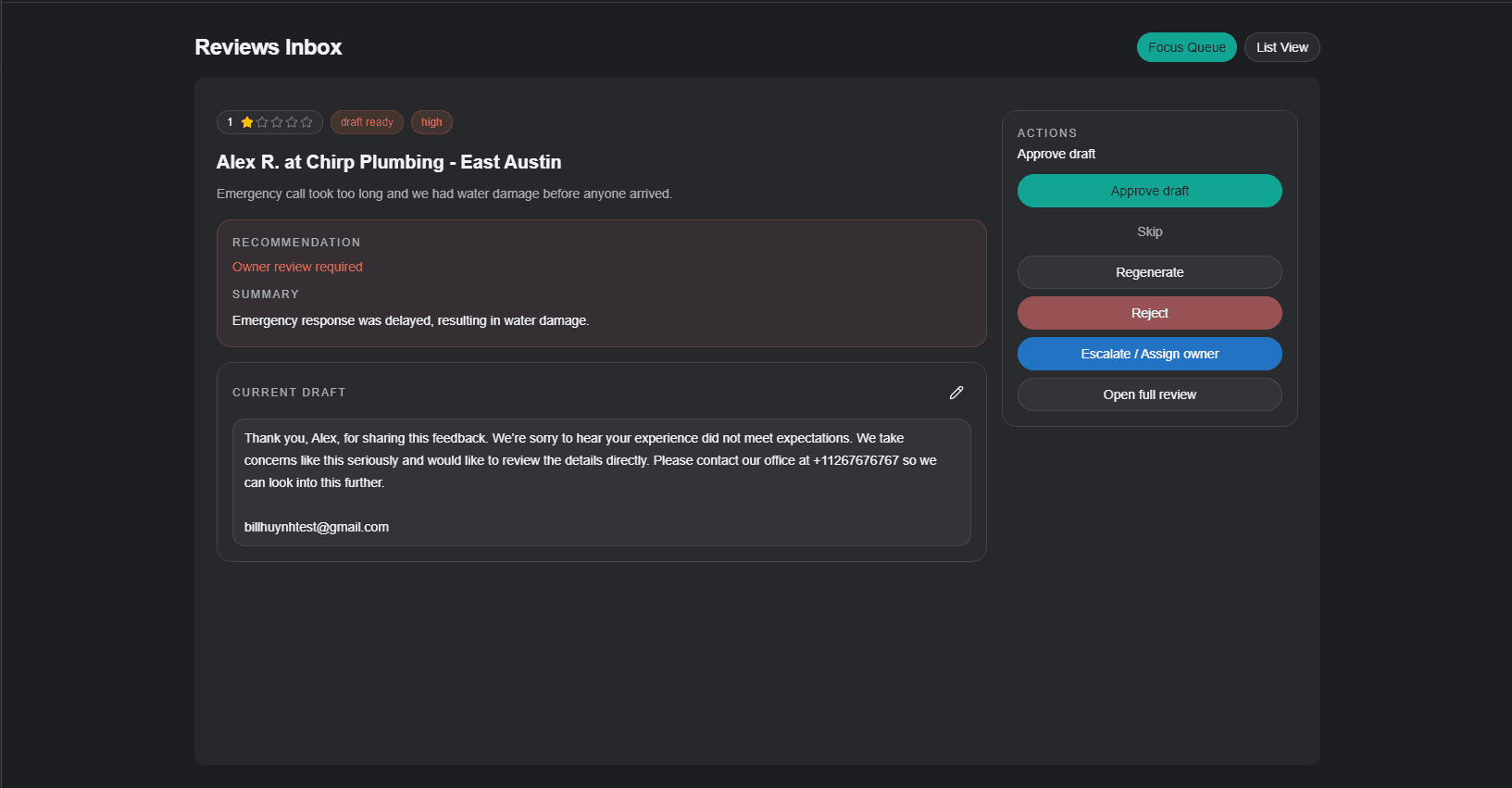
Focus queue shows reviews that need attention based on sentiment and urgency.
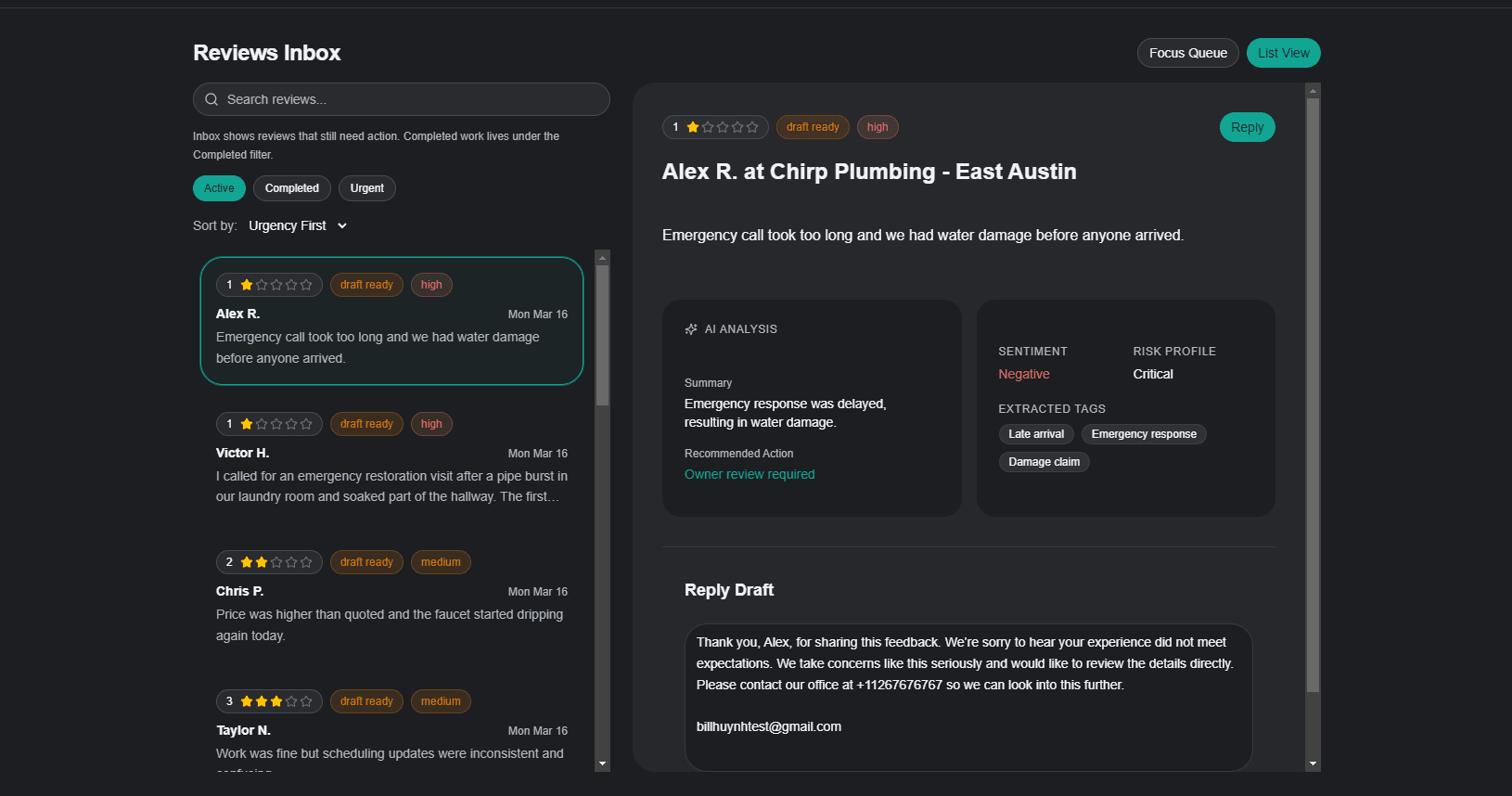
List view with sentiment tags, urgency indicators, and AI draft previews.
Technical Implementation
Built with Next.js, TypeScript, PostgreSQL, and Drizzle ORM. Integrated Google Business Profile review data into an internal workflow that classifies reviews using AI and generates response drafts through OpenAI. Designed the system so business owners stay in control of the final message by reviewing, editing, or rejecting generated replies before posting. Focused on creating a clean dashboard experience that surfaces the most important reviews first.
Results
What I Learned
This project taught me how product value often comes from workflow design, not just model output. Generating a response draft is useful, but the real challenge is making sure the right reviews are surfaced at the right time and that the business owner can act on them quickly. That pushed me to think more carefully about urgency classification, review tagging, and how the UI should prioritize information.
I also learned more about designing AI features for trust. Business owners should not feel like they are handing over their voice to an LLM, so I focused on keeping the human in the loop. Instead of fully automating posting, Chirp emphasizes approval and editing, which makes the product feel more reliable and practical for real businesses.
Another key lesson was around permissions and external API integration. Working with Google review data and OpenAI together made me think more carefully about backend boundaries, secret management, and how to keep integrations secure while still making the app feel responsive.
If I continue building Chirp, I would expand observability around classification quality, track which AI drafts get edited most often, and use that feedback to improve prompting and tagging accuracy over time.